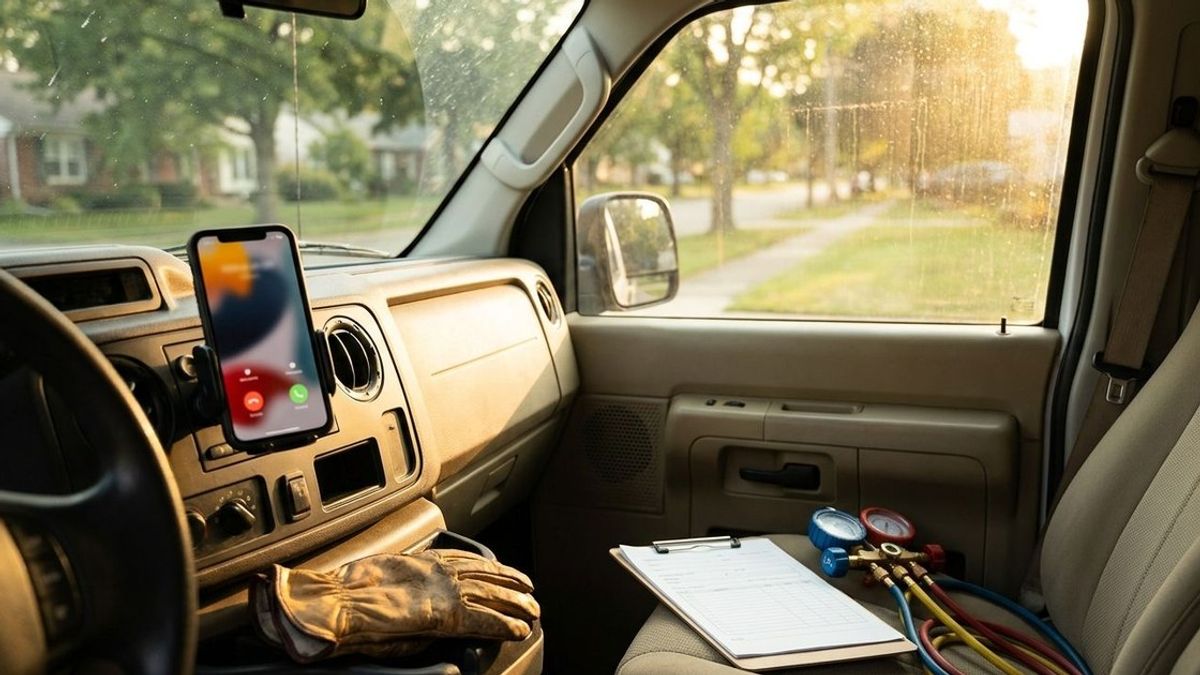
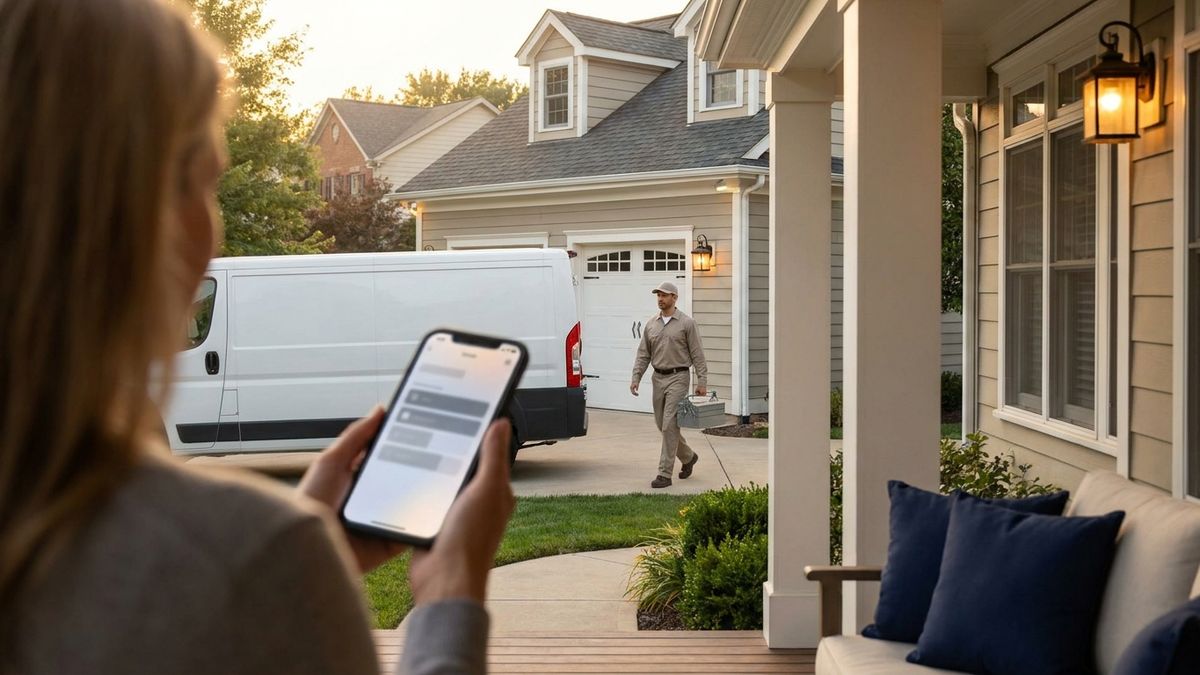
Two Google products. One homeowner — either in a panic because the AC died, or calmly planning a replacement.
If you run HVAC, plumbing, electrical, or another local trade, you've probably heard "run Google Ads" and "get on Local Services Ads" as if they were the same thing. They're not. One is mostly pay-per-click Search. The other is a pay-per-lead placement with a verified business profile. Both can fill the board. Both can waste money if the shop behind them leaks.
This is a plain comparison and a "start here" pattern for home service companies — not a one-size answer, and not a stack of fake cost-per-lead averages.
Clicks don't pay the techs. Jobs do.
What Local Services Ads actually are
Local Services Ads (LSA) are Google's home-services placement that sits prominently when someone searches for a local pro. You build a provider profile: categories, service area, hours, photos, reviews. When a homeowner reaches out through the ad — often a call or message — you pay for that lead, not for every click on a blue link.
Google screens and verifies eligible businesses. As of late 2025, Google unified older badge programs (including what many owners still call "Google Guaranteed" or "Google Screened") into a single Google Verified badge for profiles that complete screening. Homeowners see a trust signal that you've passed Google's verification checks. Exact requirements vary by category and market — licenses, insurance, background checks, and review thresholds may apply.
LSA is strong when:
- You're in an eligible category (HVAC, plumbing, electrical, and many other trades)
- You can pass verification
- You have (or can build) solid reviews and a fast response habit
- You want high-intent local demand without building a complex keyword account on day one
What "good" LSA readiness looks like
- Business verified and categories mapped to the jobs you actually want
- Service area matches the towns you cover (not half the state "just in case")
- Reviews that look real and recent
- Someone answers the phone and replies to messages quickly — Google cares about response behavior
- Clear hours and after-hours plan so emergency intent doesn't die in voicemail
Setup friction is real: paperwork, roster checks, categories, disputes. Plan for that. It's not "flip a switch and leads rain."
What classic Google Ads (Search) are
Google Ads Search is the classic pay-per-click product. You bid on keywords (and manage match types, negatives, and location targeting). Homeowners see text ads in Search results. You pay when someone clicks — then your landing page and phone process have to finish the job.
Search is strong when:
- You need coverage LSA doesn't win (niche services, commercial work, brand defense)
- You're pushing specific high-ticket or planned work ("furnace replacement," "tankless water heater install")
- You want finer control over messaging, offers, and landing pages
- LSA eligibility or review strength isn't there yet
Why tracking and the landing page decide whether Search is a money pit
Search without tracking is guessing. Search without a page built to call or book is renting clicks for a bounce.
You need:
- Call tracking and form tracking tied to campaigns
- Negatives so you aren't paying for DIY, jobs, or towns you don't cover
- A phone-first page with an obvious next step
- A path from click → answered call → booked job
If the site is slow or fuzzy, fix that before you "scale" Search. Ads are a faucet. The site and the CSR are the pipes.
Side-by-side comparison
How you pay
- Local Services Ads: Typically per qualifying lead (call / message / booking through LSA)
- Google Ads (Search): Per click
Where it shows
- Local Services Ads: Prominent local services unit on relevant searches
- Google Ads (Search): Search ads among (and above/below) organic results
Lead format
- Local Services Ads: Often call or in-product message; high intent
- Google Ads (Search): Click → your site / call extension; you own the post-click path
Setup friction
- Local Services Ads: Verification, categories, reviews, screening
- Google Ads (Search): Account structure, keywords, negatives, landing pages, conversion tracking
Best job types
- Local Services Ads: Local emergency and standard residential demand you're verified for
- Google Ads (Search): Specific services, brand, planned replacement, gaps LSA doesn't cover
What you control
- Local Services Ads: Profile, budget, categories, area, responsiveness
- Google Ads (Search): Keywords, ads, bids, audiences, landing pages, extensions
Common failure modes
- Local Services Ads: Slow response, weak reviews, wrong categories/area, disputed leads ignored
- Google Ads (Search): Broad match chaos, no negatives, weak pages, optimizing to cheap clicks not booked jobs
Neither replaces the map pack. Organic local presence is still an asset you build. Paid Google is the lever you can turn this week.
Which should a shop run first?
Default pattern for many HVAC / plumbing shops
Start with LSA when you're eligible and review-ready — then use Search to backfill gaps.
Why LSA first often fits:
- High-intent local queries already map to the product
- Pay-per-lead framing is easier for many owners to judge early
- Profile + reviews + response habits transfer trust into the booking conversation
Then add Search for:
- Services or towns LSA under-delivers
- Replacement and membership language you want to control tightly
- Brand terms so competitors don't siphon your name
When Search-first makes more sense
- LSA category / market / verification isn't a fit yet
- Heavy commercial, specialty, or niche work LSA doesn't surface well
- You need brand defense now
- You already have strong landing pages and tracking, and specific high-ticket keywords worth owning
- Review count or response capacity would tank LSA before it helps
Running both with separate jobs for each dollar
You can — and many shops should — run LSA and Search together. Don't mash them into one vague "Google" bucket.
Give each dollar a job:
- LSA: verified local demand into the phone
- Search: keyword-specific coverage and offers LSA doesn't win
- (Later) Meta: seasonal shaping and remarketing — not usually the emergency channel
That matches how we talk about Google & Meta ads for home services: Google for people who need you today; Meta for people who will need you this season; measured on booked jobs.
Budget thinking without fake prices
Two numbers, kept separate on purpose:
- Ad spend to Google (and Meta, if you add it) — media budget billed by the platforms
- Management / strategy fee — the work of building, tracking, and optimizing
Ad spend is not included in a typical agency management fee. On our engagements, Google and Meta bill you directly; the fee covers the work. See pricing.
How to think about starting budget without inventing a magic number:
- Start from capacity: how many jobs can you actually take this week?
- Pick a spend level you can sustain long enough to learn (not one panicked weekend)
- Judge cost per booked job, not CPL alone — a cheap lead that never books is expensive
- Market, trade mix, and seasonality matter; a fair starting point depends on towns and how you take calls
We won't invent a budget on a blog page. A sensible partner will recommend a starting range after they understand your board — then prove it books work before scaling.
The ops layer Google can't fix
Missed calls. Slow follow-up. Weak offer. Fuzzy pricing. Full calendar with no overflow plan.
Both LSA and Search will look "expensive" if the shop leaks. That's not a Google problem. That's a business problem.
Before you raise budget:
- Set a response-time standard
- Own the after-hours path
- Make the offer and next step obvious
- Track what happens after the lead hits the board
If growth is stalling and marketing isn't the real constraint, start with consulting. We wrote the longer version here: more leads won't fix a leaky business.
How this fits with SEO, GEO, and Meta
Ads are the faucet. Turn them off and the paid calls stop.
Local SEO / map pack is an asset. Rankings and a healthy Google Business Profile keep sending homeowners without a per-click bill attached. Most shops get the best results running paid and organic together.
GEO / AI search is about getting named when a homeowner asks ChatGPT or Gemini who to call. The same trust signals that help LSA — reviews, consistent NAP, clear service-area identity — help models understand and recommend you.
Meta still matters for seasonal offers, membership pushes, and remarketing to people who visited but didn't call. It is rarely the first lever for "AC emergency tonight." Use it when Google is already earning its keep, or when you're shaping demand ahead of a season — again, each dollar with a job (ads).
FAQ
What is the difference between Google Local Services Ads and Google Ads for home services?
Local Services Ads are a pay-per-lead local placement with a verified provider profile (Google Verified for businesses that complete screening). Google Ads Search is pay-per-click: you bid on keywords and send traffic to your site or call extensions. LSA emphasizes verified local profiles and inbound calls/messages; Search emphasizes keyword control and landing-page conversion.
Should an HVAC or plumbing company start with LSA or Search Ads?
Many residential shops start with LSA when eligible and review-ready, then add Search to cover gaps, brand, and specific high-ticket terms. Start with Search first when LSA isn't a fit yet, when you need specialty/commercial coverage, or when you already have strong pages and keyword discipline. Capacity and answer rate matter as much as the product choice.
Can you run Local Services Ads and Google Ads together?
Yes. Treat them as separate jobs for separate dollars — don't optimize them as one blurry "Google" number. Watch overlap, response capacity, and cost per booked job across both.
What does Google Guaranteed mean for homeowners calling a contractor?
Many owners still use "Google Guaranteed" / "Google Screened" from older Local Services branding. Google has moved eligible Local Services advertisers to a unified Google Verified badge after screening and verification. For homeowners, it signals the business passed Google's checks; it is not a substitute for your own vetting, and badge programs can change. Always confirm current Google Help Center wording for your category.
How should a shop measure success on paid Google (beyond cost per lead)?
Track calls and messages that become booked jobs, cost per booked job, answer rate, and whether spend maps to the towns and trades you want. CPL is an early signal. Booked work is the scoreboard.
Is ad spend included in a typical agency management fee?
No. Media budget goes to Google (and Meta). The management fee covers strategy, build, and optimization, and those two numbers should stay separate. That's how transparent engagements are structured on our pricing and ads pages.
Ready to pick the first Google lever?
Tell us the trades and the towns. We'll tell you whether LSA, Search, or both should turn on first — and what the shop has to fix so those leads actually book.
Get your free game plan · Or see how we run Google & Meta ads if you already know paid traffic is the next move.